Anxiety's Emotional Roots: How Energy Healing Reaches Them

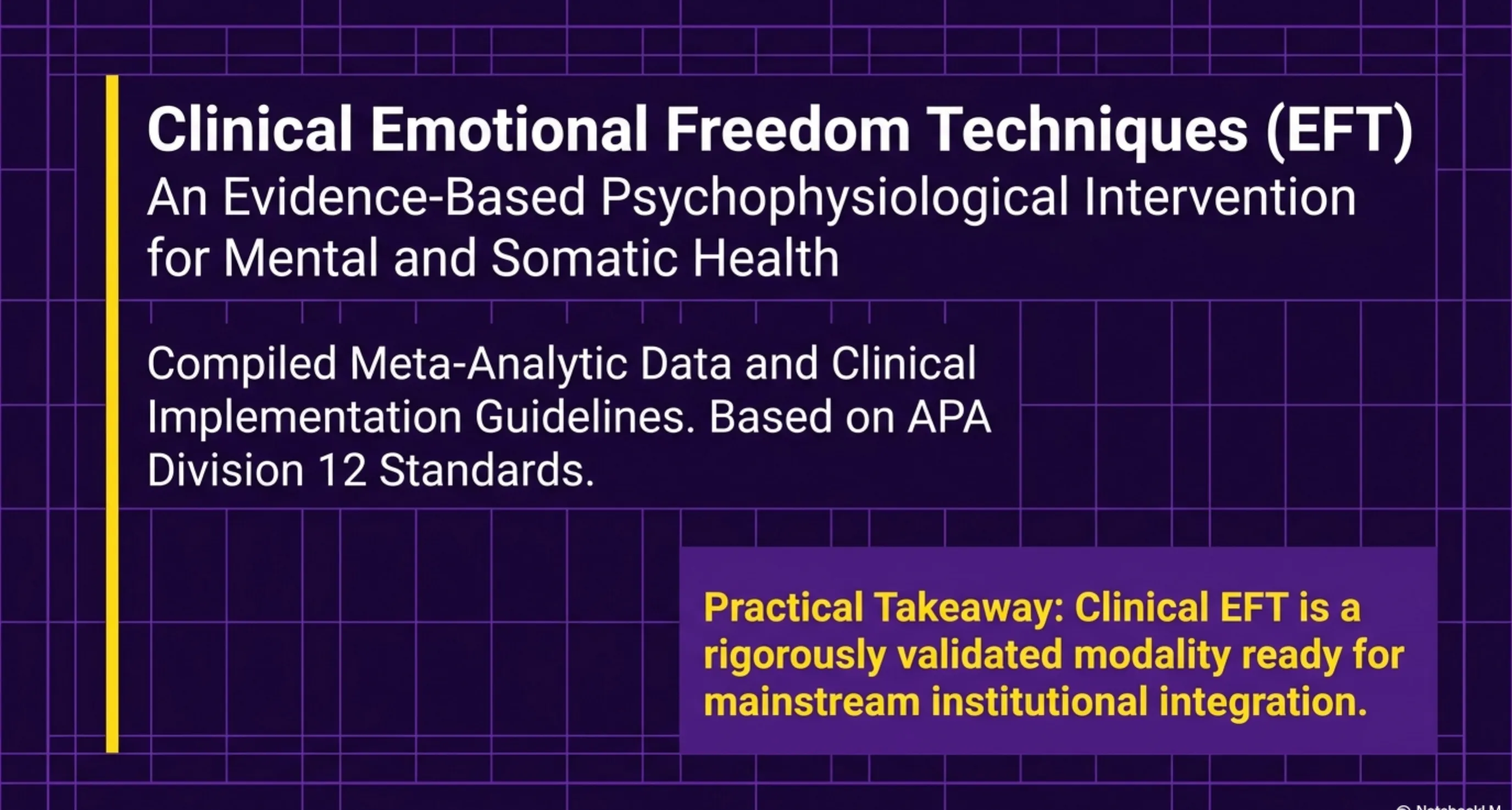
Anxiety has multiple layers, and the most persistent presentations usually trace to emotional substrate that cognitive techniques alone do not fully reach. Energy healing modalities address the autonomic and emotional layers directly through structured contact, attention, and somatic + verbal naming. The 2022 Stapleton meta-analysis covers 56 EFT RCTs with effect sizes around d = 1.23 for anxiety. Best fit alongside conventional first-line treatment.
Key Questions Answered
Why does cognitive anxiety treatment plateau for some people?
Because the limiting factor is often the autonomic and emotional substrate, not the cognitive layer. CBT works on cognitive distortions. When those are addressed but anxiety persists, the substrate is the limiting factor.
What does "emotional root" actually mean?
Specific early experiences or formative events that encoded conditioned threat associations. These show up later as anxiety triggers that look disproportionate to the current situation.
Which modalities work best for emotional-root anxiety?
EFT for self-applied autonomic regulation. Reiki and Healing Touch for session-based parasympathetic activation. EMDR for trauma-component anxiety. Consciousness coaching for the identity-belief layer.
How long does it take?
EFT can produce measurable autonomic regulation in single sessions. Trigger-specific work runs 4 to 8 sessions. Identity-level work runs 6 to 12 sessions.
Should I do this instead of medication or CBT?
No. As a complement, not a replacement. CBT remains the evidence-based first-line for anxiety.
In This Guide
Key Takeaways
- Anxiety often persists despite cognitive treatment because the limiting factor is the autonomic and emotional substrate, not the cognitive layer.
- EFT has 56 RCTs (Stapleton 2022) with d ≈ 1.23 for anxiety. Reiki has growing evidence for procedural and chronic-condition anxiety.
- Emotional-root work targets specific formative events or identity beliefs that encoded conditioned threat associations.
- Layered care (CBT + energy healing + consciousness coaching) consistently outperforms single-modality treatment for treatment-resistant anxiety.
- Best fit alongside conventional first-line treatment, not as a replacement.
Listen to the deep-dive on this article
A two-host audio overview of the key ideas. Origins, mechanism, evidence, and what to expect. Useful when you would rather listen than read.
Why Cognitive Treatment Plateaus
CBT for anxiety has effect sizes around d = 1.5 to 2.0 in well-designed trials. It is the most-studied psychotherapy approach. For most patients, CBT produces substantial improvement.
For a substantial subgroup, CBT produces partial improvement that plateaus. The cognitive distortions are identified and revised. The behavioural exposure has been done. The skills are in place. And anxiety persists.
The pattern is recognisable. Patients can articulate that their fears are irrational. They have done the homework. They use the tools. The felt-sense of anxiety remains.
The limiting factor in this pattern is not cognitive. It is autonomic and emotional. The body has not received the signal that the threat is over. The substrate beliefs about safety, worth, and control remain intact even when the cognitive overlay has been revised.
This is where energy healing earns its place. The modalities reach the layer CBT does not target directly: autonomic regulation, conditioned threat associations, and identity-level beliefs.
What Emotional Roots Actually Mean
"Emotional roots" is a specific concept, not a vague reference to feelings. It refers to identifiable formative experiences or identity beliefs that encoded the conditioned threat associations driving current anxiety.
Common examples: an early experience of public humiliation in school anchored a threat association with being seen by groups. Decades later, this presents as performance anxiety in professional contexts that the rational mind cannot dispel.
A childhood family dynamic that made being noticed unsafe anchored an identity belief: "I am not someone who is supposed to be heard." This presents as public-speaking fear, asking-for-what-you-want difficulty, and ceiling on visibility-based career growth.
A specific trauma in adolescence with a specific perpetrator type anchored a generalised threat association with that demographic that activates as anxiety in encounters fitting the profile.
These are not metaphors. They are specific encoded patterns that show up in current anxiety. The patterns are identifiable through structured questioning. The mechanism is implicit memory and conditioned autonomic response.
How EFT Reaches the Substrate
EFT combines fingertip tapping on acupressure-meridian points with verbal phrases that name the specific issue. The protocol takes 15 to 20 minutes and produces measurable autonomic regulation through cortisol reduction and HRV improvement.
For emotional-root anxiety specifically, EFT works in two ways. First, daily-practice EFT lowers baseline autonomic arousal. The chronic sympathetic activation that drives anxiety becomes less pronounced. Second, trigger-specific EFT targets specific anxiety patterns. The setup statement names the specific trigger or memory. The tapping desensitises the conditioned response.
The 2022 Stapleton systematic review covers 56 EFT RCTs with effect sizes around d = 1.23 for anxiety. The methodological caveats apply: many studies are small, blinding is difficult. The effect sizes that survive across multiple research teams are real but smaller than CBT in head-to-head comparisons.
For self-applied work: try EFT for two weeks of daily 15-minute sessions plus emergency use during high-anxiety moments. If average level drops by 2 or more points across two weeks, the modality is working for you.
How Reiki and Touch Therapies Work
Reiki and Healing Touch are session-based hands-on biofield therapies. The 2024 BMC Palliative Care meta-analysis covering 13 Reiki studies and 824 patients found significant impact on anxiety scores.
For emotional-root anxiety, the mechanism is autonomic regulation through structured presence. The session structure (slowed pace, non-judgmental practitioner attention, sustained physical contact) produces parasympathetic activation that the patient cannot easily produce alone.
Strongest evidence-based fits: pre-procedural anxiety, post-surgical recovery, fibromyalgia, chronic-condition anxiety. Course of work: 6 to 8 sessions over 4 to 8 weeks for most clinical applications.
Reiki and Healing Touch differ in standardisation and credentialing rigour but produce comparable effect sizes. Practitioner relationship matters substantially. A 60-minute session has a structurally larger therapeutic-alliance contribution than a 15-minute self-applied protocol.
When Identity-Layer Work Is the Right Fit
For some persistent anxiety presentations, even autonomic regulation reaches a ceiling. The body is calmer. The triggers are less reactive. And the underlying belief that drives the anxiety remains intact.
The pattern is recognisable. Anxiety reduces with EFT or Reiki. Specific triggers desensitise. Then a new context arrives that activates the same fundamental belief, and anxiety re-emerges in a new form.
The limiting factor here is identity-level. The belief might be: "I am fundamentally unsafe in groups." "I am not significant enough to take up space." "Being seen is dangerous." These beliefs operate silently and generate the autonomic and cognitive layers that show up as specific anxiety presentations.
Consciousness coaching addresses this layer directly through structured belief-revision processes. Course of work: 6 to 12 sessions for a specific identity belief.
For combined treatment, the layered approach works. CBT for cognitive layer. EFT or Reiki for autonomic layer. Consciousness coaching for identity layer.
Frequently Asked Questions
How is "emotional roots" different from "deep work"?
Emotional roots is more specific. It refers to identifiable early experiences, formative events, or identity beliefs that encoded conditioned threat associations.
Can I do this work alone?
EFT is self-applicable for trigger desensitisation and daily regulation. Identity-level work and trauma-component anxiety work benefit from a trained practitioner.
Is there scientific evidence for this approach?
EFT has 56 RCTs. Reiki has 13-study anxiety meta-analysis (BMC 2024). EMDR is VA first-line for PTSD-component anxiety.
What if I have severe anxiety?
Severe anxiety with functional impairment needs first-line evidence-based treatment. Energy healing belongs alongside, not instead of, that primary treatment.
Continue Reading
More from the blog
Emotional Trauma and Physical Pain: Breaking the Cycle
The bidirectional relationship between emotional trauma and physical pain, and how to interrupt it.
pain-and-healingEnergy Healing for Anxiety: How It Works and What to Expect
How energy healing approaches address anxiety at the root cause rather than just managing symptoms.
Keep exploring
Browse the rest of NeuralFlow's long-form guides on consciousness coaching, energy healing, and mind-body science. Every article is research-backed and built as a multi-format knowledge hub.
Read more articles