How Emotional Trauma Becomes Physical Pain

Emotional trauma drives chronic physical pain through documented neurobiological pathways: HPA-axis dysregulation, chronic sympathetic activation, central sensitisation, and inflammation. The 1998 ACE study found graded relationships between childhood adversity and adult chronic pain. The cycle is breakable through layered treatment combining body-based work, conventional pain medicine, and identity-level work where appropriate.
Key Questions Answered
Is the trauma-pain link actually real?
Yes, and well-documented. The ACE study (1998 and decades of replications) shows graded relationships between childhood adversity and adult chronic pain. PTSD doubles chronic pain prevalence in epidemiological samples.
What is central sensitisation?
A pain-amplification mechanism where the nervous system becomes more responsive to pain signals over time. Chronic stress and trauma history are documented contributors.
Which modalities break this cycle?
Body-based trauma work (EMDR, somatic experiencing, trauma-informed yoga) addresses the trauma substrate. EFT and Reiki address the autonomic regulation layer.
Does this mean my pain is "all in my head"?
No. The pain is real and biological. "Mind-body" does not mean "imagined." It means real biology with multiple contributing layers.
In This Guide
Key Takeaways
- The 1998 ACE study and decades of replications show graded relationships between childhood adversity and adult chronic pain.
- PTSD doubles chronic pain prevalence in epidemiological samples; complex PTSD shows even larger associations.
- The mechanism includes HPA-axis dysregulation, chronic sympathetic activation, central sensitisation, and inflammation.
- Body-based trauma work breaks the cycle when added to conventional pain medicine.
- The pain is real and biological; "mind-body" does not mean imagined or psychogenic.
Listen to the deep-dive on this article
A two-host audio overview of the key ideas. Origins, mechanism, evidence, and what to expect. Useful when you would rather listen than read.
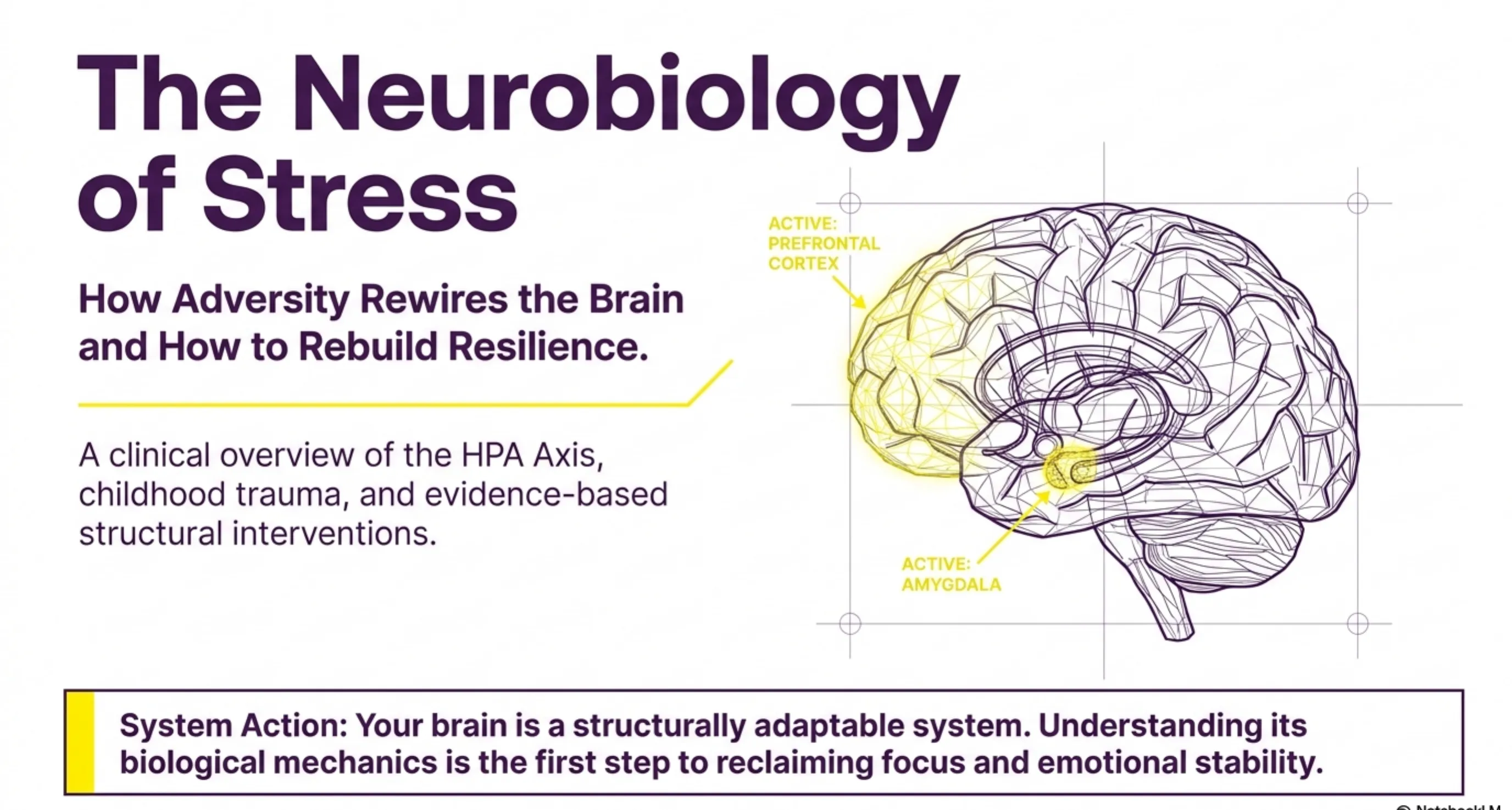
The Evidence Is Clear
The trauma-chronic-pain link was documented in the 1998 Adverse Childhood Experiences (ACE) study, a large epidemiological study by Felitti and Anda at Kaiser Permanente. The study found graded relationships between childhood adversity scores and adult chronic conditions, including chronic pain across multiple specific presentations.
Patients with high ACE scores had substantially higher prevalence of chronic pain in adulthood. The relationship was dose-dependent: more childhood adversity, more chronic pain.
Decades of replications have confirmed the original finding. PTSD nearly doubles chronic pain prevalence in epidemiological samples. Complex PTSD shows even larger associations. Specific trauma types show particularly strong associations with specific chronic-pain conditions.
This is not "people with trauma report more pain." It is "documented neurobiological mechanisms link trauma history to actual physiological changes that drive chronic pain."
How the Mechanism Works
Several documented pathways connect trauma to chronic pain.
HPA-axis dysregulation. The hypothalamic-pituitary-adrenal axis controls cortisol response. Chronic trauma exposure produces lasting HPA dysregulation that drives many somatic symptoms.
Chronic sympathetic activation. Trauma encodes threat responses that activate the sympathetic nervous system. Sustained sympathetic dominance drives muscle tension, vasoconstriction, inflammation, and the chronic-pain substrate.
Central sensitisation. The nervous system becomes more responsive to pain signals over time. Trauma history is a documented contributor. Pain thresholds drop. Normal stimuli become painful.
Inflammation. Chronic stress drives systemic inflammation through multiple pathways. Inflammatory markers run elevated in patients with high trauma history.
Neuroplastic encoding. Repeated pain experiences encode neural patterns that persist. The pain "memory" becomes part of the neural substrate.
Breaking the Cycle: Layered Treatment
Effective treatment for trauma-driven chronic pain typically involves layers, not single modalities.
Layer 1: Medical workup and direct pain treatment. Pain specialist for accurate diagnosis. Conventional pain medicine for the symptom layer.
Layer 2: Trauma-substrate work. EMDR for traumatic memory components. Somatic experiencing for chronic autonomic activation. Trauma-informed yoga for sustainable maintenance.
Layer 3: Autonomic-regulation work. EFT for self-applied daily regulation. Reiki or Healing Touch for session-based parasympathetic activation.
Layer 4: Identity-level work where appropriate. For patients whose chronic pain coexists with substrate beliefs about deservedness or victimhood, consciousness coaching can address those layers.
Layer 5: Lifestyle factors. Sleep, exercise, diet, social connection. Foundation that supports all the other layers and is often underused.
Most patients benefit from combinations across two or three layers. The right layer combination depends on the specific presentation, trauma history, and response to conventional treatment.
Conditions Where the Cycle Is Most Documented
Fibromyalgia. Substantial central-sensitisation component. Trauma history common (estimated 30-60% of patients). Body-based trauma work has evidence base from multiple pilot studies.
Chronic low back pain. Strong association with stress and trauma. Central sensitisation contributes substantially. Modern treatment combines medical evaluation with body-based and trauma-informed work.
Migraine. Stress is the most consistently documented trigger. PTSD doubles migraine prevalence. The cortical spreading depression mechanism is sensitive to autonomic load.
Chronic pelvic pain syndromes. Strong trauma associations, particularly with sexual trauma history. Body-based work is often the limiting factor that conventional treatment alone misses.
Irritable bowel syndrome. Significant stress and trauma associations. HPA dysregulation contributes.
Complex regional pain syndrome. Trauma history common. Sympathetic nervous system involvement is part of the mechanism.
For all these conditions, the pattern holds: real biological pain with documented trauma-mechanism contribution. Layered treatment that addresses both layers consistently outperforms medication alone.
Where to Start
For chronic pain that may have a trauma component, the right starting point depends on what care you currently have and what gaps remain.
If you have not had medical workup recently, that is the first step. Accurate diagnosis matters. Some trauma-driven chronic pain has specific medical components that need direct treatment.
If you have been treated medically without full resolution and trauma history is present, body-based trauma work is the right next layer. Find a trauma-trained therapist or somatic-experiencing practitioner. EMDR if your trauma involves specific traumatic memories. Somatic experiencing if the presentation includes high dissociation.
If you have done medical and trauma work and pain persists, consider the autonomic regulation layer (EFT, Reiki) and the identity layer (consciousness coaching).
Across all these, the principle stays consistent: the pain is real biology, the trauma component is real biology, layered treatment outperforms single-modality work for most chronic-pain presentations with trauma component.
Frequently Asked Questions
How do I know if my pain has a trauma component?
Markers: pain that started or worsened after a major stressful event; pain that flares with stress; trauma history with chronic pain present; chronic pain that has not responded to conventional treatment alone.
Should I see a pain specialist or a trauma therapist?
Both, in coordination. Pain specialist for medical workup and direct treatment. Trauma therapist for the substrate work.
Can this work for fibromyalgia specifically?
Yes. Fibromyalgia has substantial central-sensitisation and trauma-history components. Layered care including body-based work consistently outperforms medication alone.
Continue Reading
More from the blog
Can You Heal Trauma Without Talking About It?
How body-based and energy-based modalities can process trauma without traditional talk therapy.
mindset-transformation5 Signs Your Anxiety Has Emotional Roots and How Energy Healing Can Help
Identifying when anxiety stems from unresolved emotional patterns rather than circumstantial stress.
Keep exploring
Browse the rest of NeuralFlow's long-form guides on consciousness coaching, energy healing, and mind-body science. Every article is research-backed and built as a multi-format knowledge hub.
Read more articles